The craft
What lies beneath.
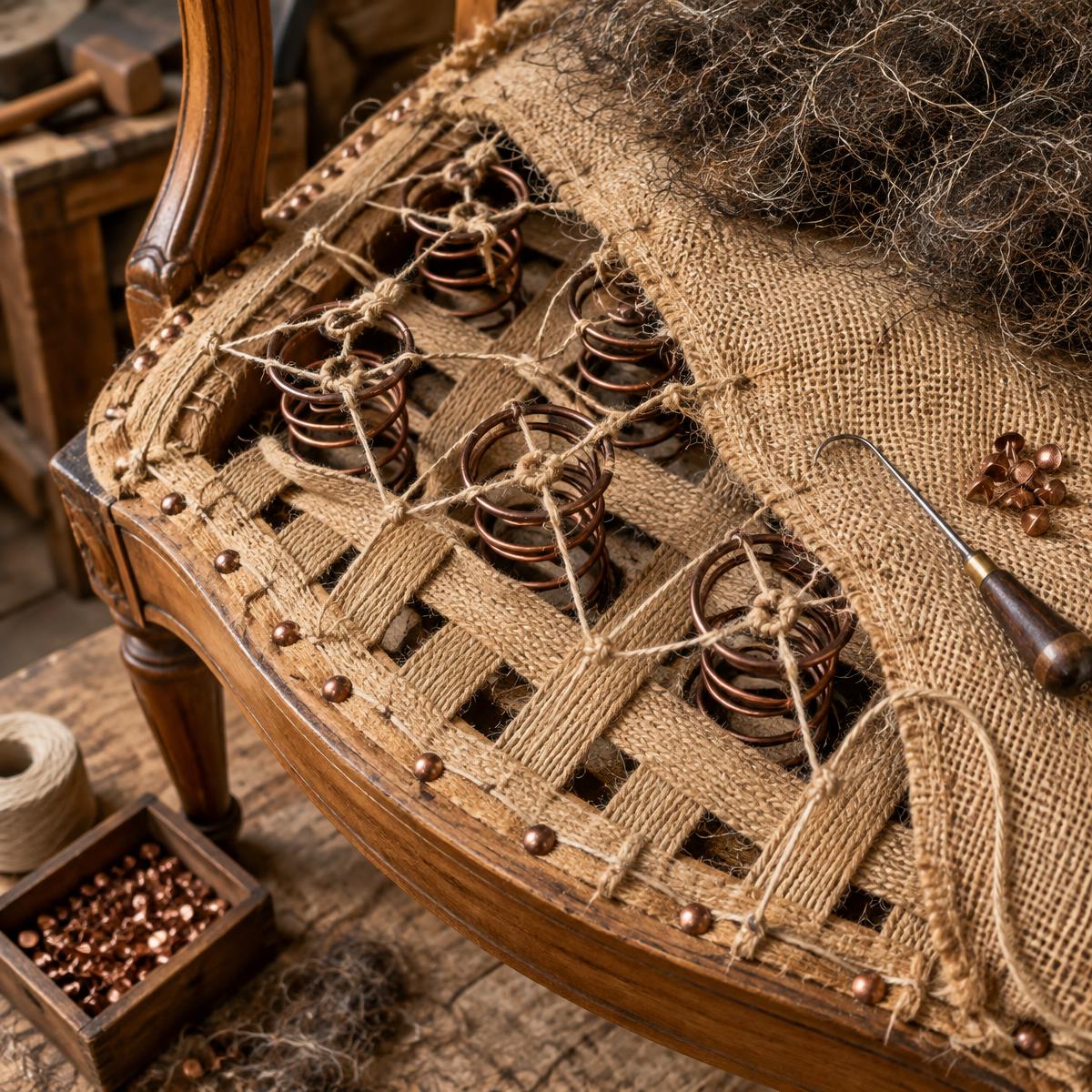
Traditional upholstery dates back centuries. Paul still builds it the same way: from the bottom up, by hand, in a strict order of natural layers.
Old ways, for good reason
Traditional versus modern.
Most modern furniture relies on foam blocks stapled to a frame. It's quick to make, but the comfort fades fast. Traditional upholstery takes a very different approach — more layers, natural materials and hand tools — and that's the method Paul has practised for over forty years.
Each layer has a job. Webbing carries the weight, springs give life, hair gives shape, and calico locks it all in place before the top fabric is ever cut. Get one wrong and the whole seat suffers. Get them all right and the chair will see out another century.
Interactive cross-section
Eight layers, one seat.
Top fabric
The cover the world sees. Chosen together, cut by eye, pleated and finished with gimp, piping or brass nails.
Why it matters
The benefits of building it properly.
Durability
01Horsehair and hand-tied springs keep their shape for decades. Foam, by comparison, breaks down in years. Traditionally built seats are routinely passed down through generations.
Value
02Re-upholstering an antique with modern foam can reduce its value. Rebuilding it traditionally respects its history — and protects what it's worth.
Comfort
03A sprung, hair-stuffed seat has a firm, supportive give that moulds subtly to the sitter over time. It simply sits differently.
Sustainability
04Jute, hessian, cotton, horsehair and wood. Natural materials, repairable for generations, rather than a sofa that ends up in landfill.
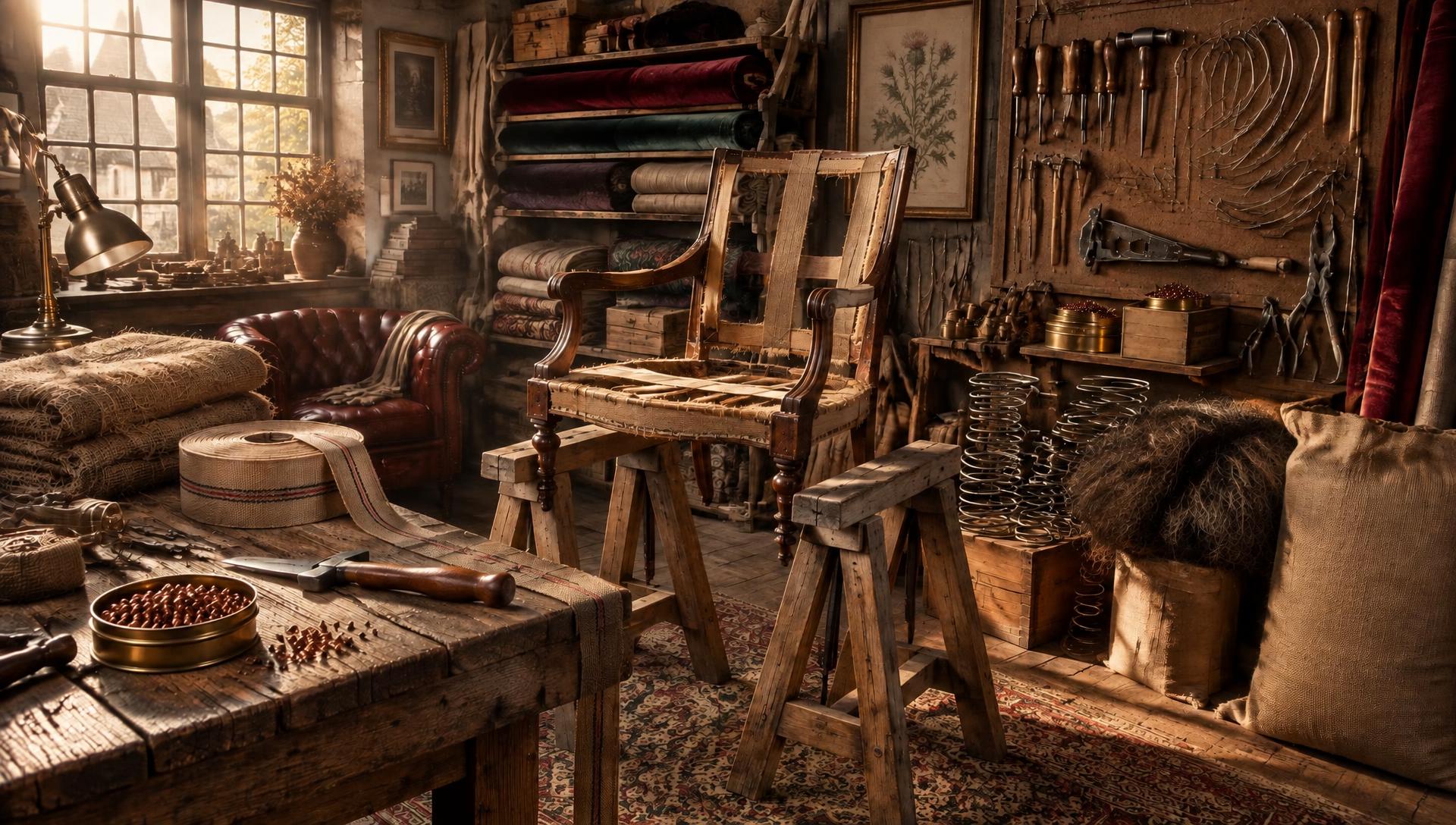
Uncovering the history of a piece is half the joy.
Start a conversation
Got a piece that deserves better?
Send Paul a photo, ring the workshop or pop round. Honest advice and a clear quote, always.